What "at the ask" and "at the bid" mean in options flow
By Faizan Ahmad. Updated .
"At the ask" means a trade filled at the lowest price sellers were offering, so the buyer was the one who paid up to get it done; "at the bid" means it filled at the highest price buyers were bidding, so the seller was the one in a hurry. Pair that with call or put to get the lean: calls bought at the ask and puts sold at the bid lean bullish, while puts bought at the ask and calls sold at the bid lean bearish. Trades near the midpoint have no clear side.
Bid, ask and mid in plain words
The bid is the most anyone is willing to pay for a contract right now. The ask, also called the offer, is the least anyone is willing to sell it for. The gap between them is the spread, and the mid is halfway. Because the same option trades on many exchanges, flow tools use the national best bid and offer: the highest bid and lowest offer quoted on any of the exchanges that report to OPRA at that moment.
Someone who wants in now pays the ask. Someone who wants out now accepts the bid. Patient traders post orders inside the spread and wait. That is the whole logic behind the side label.
What does each side label mean?
Tradytics puts one of seven chips on every print:
| Chip | Where the trade filled | What it suggests |
|---|---|---|
| Above ask | Higher than the best offer | Aggressive buyer, urgent enough to pay past the best price |
| At ask | At the best offer | Aggressive buyer |
| To ask | Between the mid and the ask | Buyer, with less certainty |
| Mid | At the midpoint | No clear side |
| To bid | Between the bid and the mid | Seller, with less certainty |
| At bid | At the best bid | Aggressive seller |
| Below bid | Lower than the best bid | Aggressive seller, urgent enough to sell past the best price |
Is it bullish or bearish?
The side alone isn't the lean; the side plus the contract is. One real example of each from October 30, 2026:
| Bought at the ask | Sold at the bid | |
|---|---|---|
| Calls | Bullish: 4,481 Meta Feb 19, 2027 $730 calls, $10.59M | Bearish: 1,885 Amazon Sep 17, 2027 $240 calls, $6.55M |
| Puts | Bearish: 170 AMD Dec 15, 2028 $910 puts, $7.28M | Bullish: 4,903 Alphabet (GOOG) Jan 15, 2027 $275 puts, $6.59M |
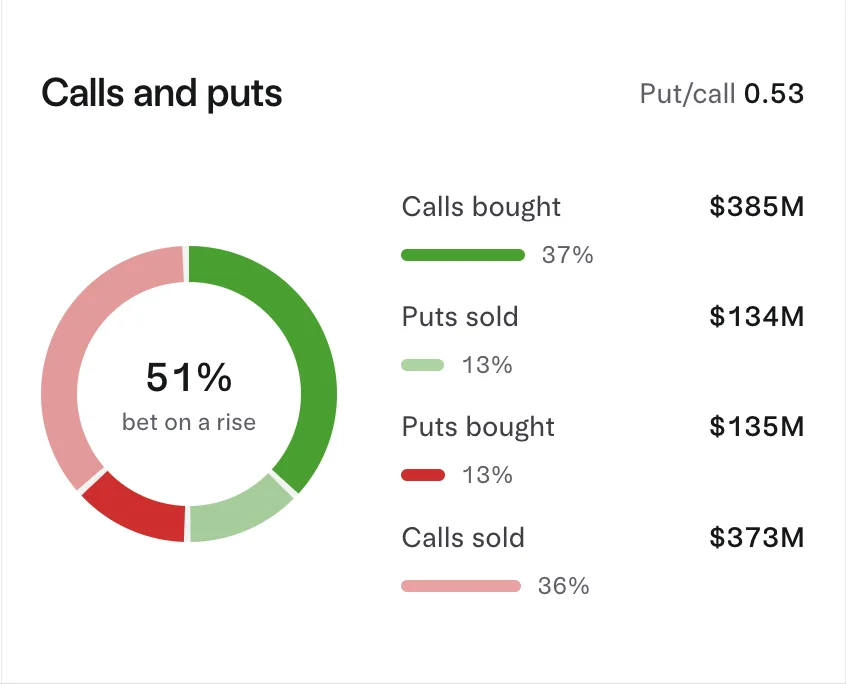
A put seller collects premium and keeps it if the stock stays above the strike, which is why a put sold at the bid leans bullish. A call seller keeps the premium if the stock stays below the strike, so a call sold at the bid leans bearish. Add up those four buckets across a whole day and you get net options flow.
Why would anyone pay above the ask?
Because the order is bigger than what's on offer at the best price. Quotes come with a size: exchanges generally require members to honor their displayed quotes only for a minimum number of contracts, from 1 to 250 depending on the stock or index. A buyer who needs more keeps lifting offers at higher prices, often on several exchanges at once, which is what a sweep is (see what an options sweep is). A quote that moves in the instant the order lands can also leave a fill above the old ask.
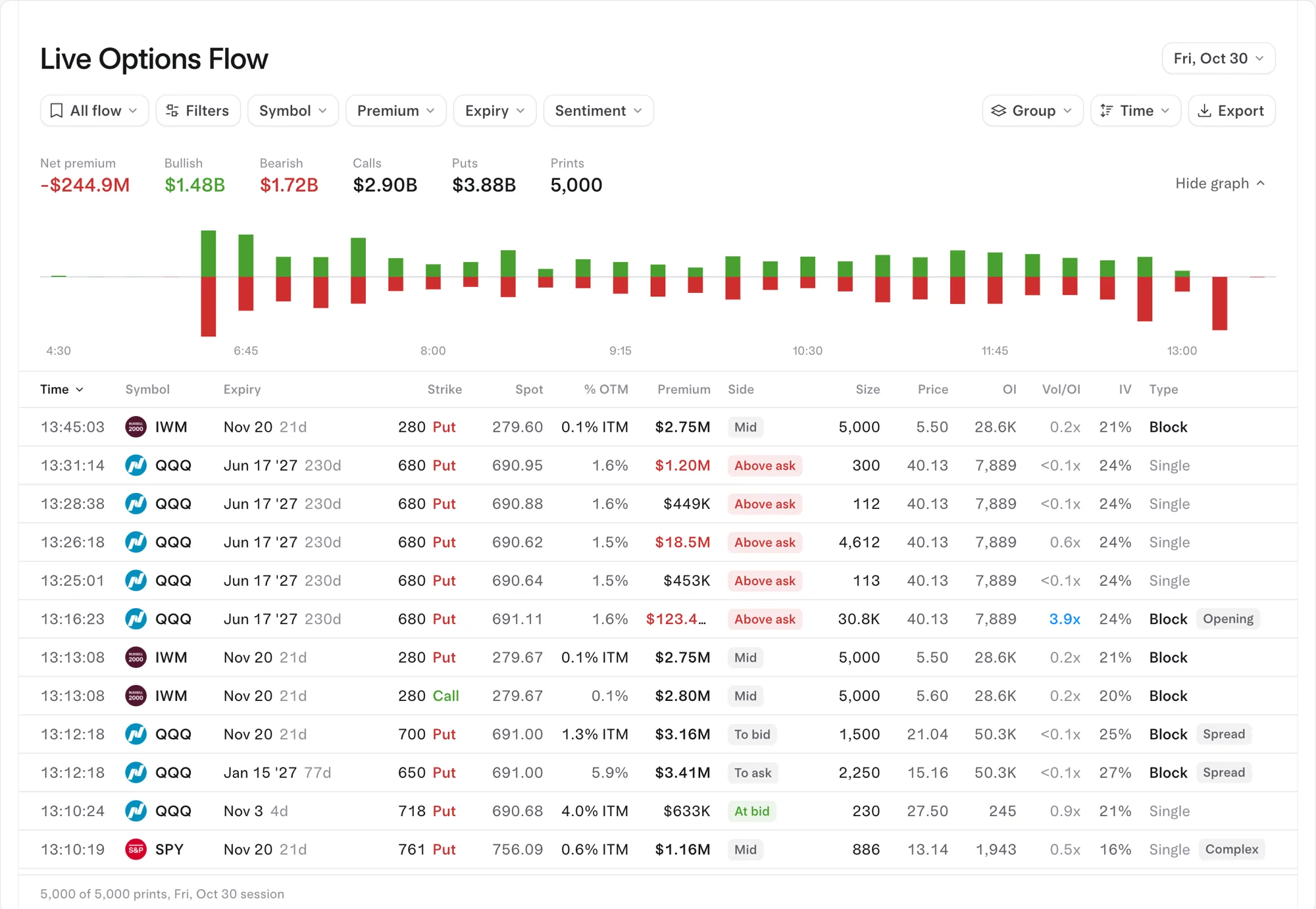
On October 30, 2026, the QQQ $680 put block expiring June 17, 2027, 30,750 contracts for $123.40M, printed above the ask: a buyer who cared more about getting that much protection done than about the last few cents.
When does the label mislead?
The label describes the fill, not the trader's whole position. A put bought at the ask is often insurance on shares the buyer owns, and a call sold at the bid can be a shareholder writing calls against stock. Legs of a multi-leg order are priced as a package, so a single leg can look aggressive when it isn't, and big negotiated trades tend to print near the mid, where there's no read at all. The deeper version, including why no tool can know the side for certain, is in how to tell if an options trade was bought or sold.
How to see it on Tradytics
Every row on the Live options flow page carries its side chip next to the premium, and the Sentiment filter narrows the list to bullish or bearish prints. For one ticker, the calls and puts card on its options page, such as Meta's, splits the day's premium into calls bought, calls sold, puts bought and puts sold. Flow is live to the second on Live and Pro; Free shows yesterday's session.
Common questions
Does "at the ask" mean the trade was bought?
It means the buyer was almost certainly the aggressive side. Every trade has both a buyer and a seller; the label tells you who crossed the spread.
What do "To ask" and "To bid" mean?
The trade filled between the mid and the ask (To ask) or between the bid and the mid (To bid). Tradytics counts To ask with the buys and To bid with the sells; they are weaker reads than At ask or At bid because the fill was closer to the middle.
Should I pay the ask on my own trades?
Paying the ask costs you the spread on the way in. Many traders place limit orders between the bid and the ask and wait, which is exactly why patient trades show up as Mid or To ask in the flow.
Is a put sweep at the ask bearish?
It leans bearish, unless the puts protect stock the buyer owns. See is a put sweep bullish or bearish?
Sources
- SEC Release No. 34-45532, Federal Register (March 15, 2002): OPRA's best bid and offer is the highest bid and lowest offer quoted on any participant exchange.
- Options Price Reporting Authority (OPRA): the consolidated last sale and quote feed, and its participant exchanges.
- Options Industry Council: Trade Entry and Execution FAQ: exchanges limit quote widths and require members to honor displayed quotes for a minimum number of contracts.
- Most bullish options flow on 2026-11-02: MRVL ($23.33M net), AMZN ($16.59M net), TSLA ($12.30M net), LITE ($6.09M net), PLTR ($4.19M net).
- Most bearish options flow on 2026-11-02: AAPL ($40.79M net), AMD ($20.37M net), MU ($10.45M net), NVDA ($7.81M net), ORCL ($7.77M net).
Updated 2026-11-02 16:06 UTC