What short-dated vs LEAPS options flow tells you
By Faizan Ahmad. Updated .
An option's expiry is the trader's deadline, so it tells you what kind of view a flow print expresses. Short-dated flow, in contracts expiring within days or a few weeks, is a bet or hedge on a near-term move or event: it carries the most leverage and the most noise. LEAPS flow, in options with roughly nine months to three years left, is usually a slower position: a stock substitute, a long-term hedge or a patient conviction bet, and deep in-the-money LEAPS behave almost like the stock itself. Neither tells you the trader is right; the expiry tells you when they need to be.
What counts as short-dated, and what counts as LEAPS?
| Bucket | Time left | What drives the price most | What a big print usually is |
|---|---|---|---|
| 0DTE | Expires today | Where the stock is right now | Day trades, one-day hedges, premium selling |
| Short-dated | Up to about a month | Fast time decay and big moves; earnings dates | Event bets, short hedges |
| Medium-dated | About one to nine months | A mix of direction and volatility | Swing and position trades, rolling hedges |
| LEAPS | About nine months to three years | Implied volatility and the stock's long-run path | Stock substitutes, long hedges, long-shot bets |
LEAPS ("Long-term Equity AnticiPation Securities") are standard options with distant expirations, up to three years out per Cboe; the Options Industry Council describes them as running from nine months to three years, with equity LEAPS typically expiring in January. New years get added as time passes: Cboe's 2026 calendar marks the date it added 2029 equity and ETP (exchange-traded product) LEAPS. The shortest end has its own guide, what are 0DTE options.
How do you read short-dated flow?
Short-dated options are cheap per share of stock they control, so a modest premium carries a lot of exposure, and the trade has to work fast. On October 30, 2026, at 10:14 AM, 5,441 Tesla November 20 $400 calls traded for $7.73M with Tesla at $396.733: 21 days out, just out of the money. That premium controlled 544,100 shares, about $216M of stock. A few percent either way in Tesla changes that position's value a lot, and the clock runs out in three weeks. The trade was smaller than the contract's open interest (17,522), so size alone can't tell you whether it opened new positions or closed old ones.
Short-dated flow clusters around events. Apple's earnings report was due the following Monday, and on October 30 its implied volatility was 42.4%, up 12.3 points, with options pricing a move of about $16.49 either way by November 4. Buyers of short-dated Apple options that day were paying for the event, and that extra volatility usually drains out after the report; see what is IV crush.
How do you read LEAPS flow?
The question to ask of a LEAPS print is how much of its price is time value. If almost none, the buyer is mostly getting stock exposure on less cash. At 3:54 PM on October 30, 2026, 392 Apple December 15, 2028 $190 calls traded for $6.91M with Apple at $345.435. That is about $176.28 a share, of which $155.44 was intrinsic value, leaving roughly $21 of time value for 777 days. The position behaves much like 39,200 Apple shares (about $13.5M of stock) held for about half the cash. That reads like a stock substitute or a long-term holder restructuring, not a burst of conviction.
LEAPS trades bought far out of the money are the opposite case: cheap, long-dated optionality on a big move, covered in why buy far out-of-the-money calls. And long-dated sales are common too: at 9:40 AM the same day, 1,885 Amazon September 17, 2027 $240 calls traded for $6.55M, sold at the bid, against open interest of 309, with Amazon at $236.976. A sale like that leans bearish, but long-dated calls are also sold against shares the seller already owns, which caps their upside rather than betting on a fall.
Why the same premium can mean very different things
| Tesla Nov 20, 2026 $400 call | Apple Dec 15, 2028 $190 call | |
|---|---|---|
| Time left | 21 days | 777 days |
| Premium | $7.73M | $6.91M |
| Contracts | 5,441 | 392 |
| Shares controlled | 544,100 | 39,200 |
| Value of those shares | About $216M | About $13.5M |
| Premium as a share of that value | About 3.6% | About 51% |
| Reads as | A leveraged, near-term bet | Close to owning the stock |
Two trades of roughly $7M each, and one controls about sixteen times as much stock, by value, as the other. That is why premium alone can't rank flow; premium vs contracts goes further into the math.
Short-dated vs LEAPS flow at a glance
| Short-dated flow | LEAPS flow | |
|---|---|---|
| Typical purpose | Event or swing bet, short hedge | Stock substitute, long hedge, long-shot bet |
| Time decay | Fast | Slow |
| Sensitivity to implied volatility | Lower | Higher (see vega) |
| Exposure per dollar of premium | High | Low, especially deep in the money |
| How to confirm it | Next-day open interest, price reaction within days | Open interest over weeks, repeat buying |
| Noise | High: hedges, round trips, spreads | Lower, but rolls and hedges are common |
Research backs the leverage point. In Pan and Poteshman's study of CBOE data from 1990 to 2001, option volume in the most leveraged, out-of-the-money contracts carried the most information about future stock returns, and low-leverage contracts carried very little. A deep in-the-money LEAPS call is about as low-leverage as options get.
How to see it on Tradytics
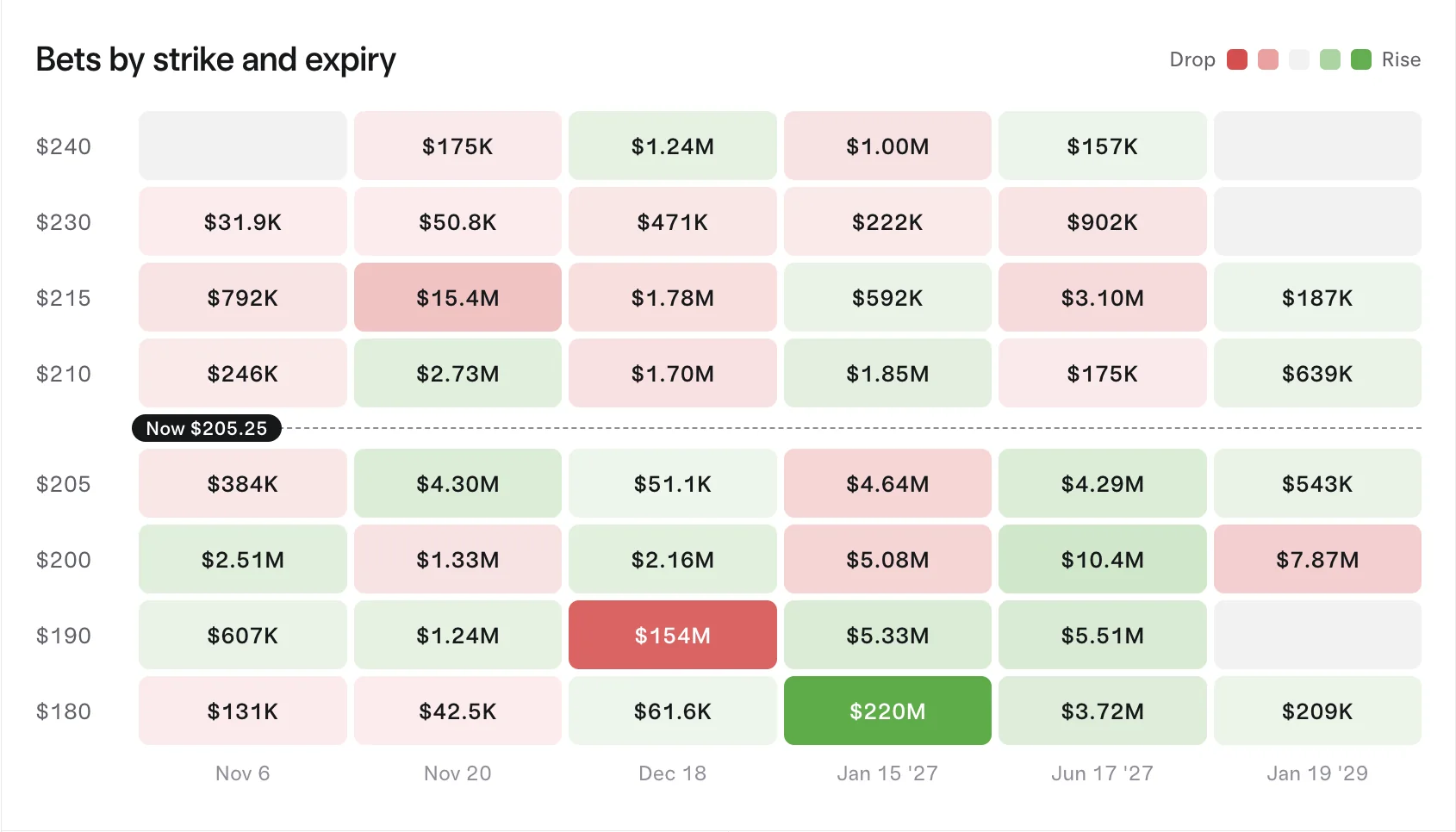
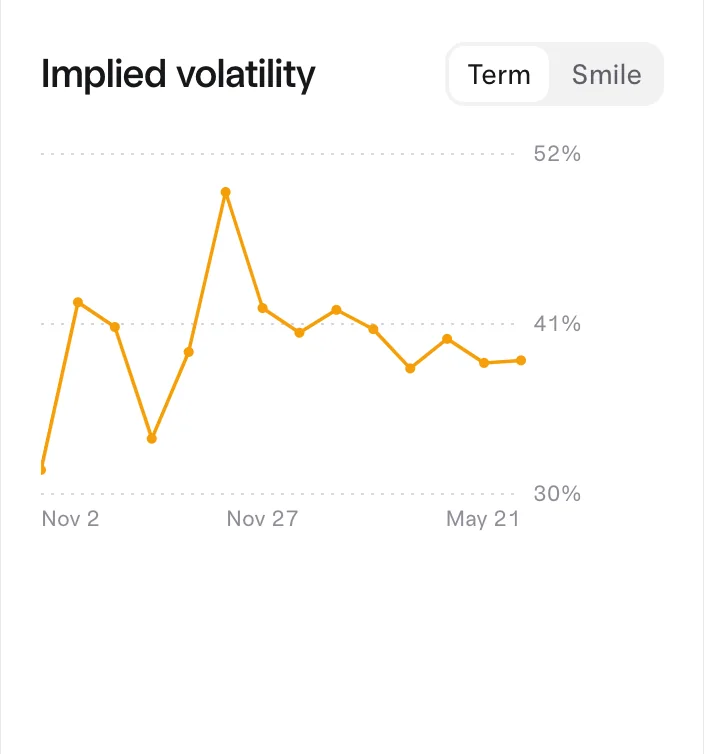
On the live options flow page, every print shows its expiry with days to expiry beside it, and the Expiry filter separates short-dated from long-dated flow. Each research options page, such as AAPL options, has a bets by strike and expiry grid that lays premium out by expiry, an implied volatility term structure showing what each expiry is pricing, and the expected move by expiry.
Common questions
Are LEAPS trades more reliable signals than short-dated ones?
Not automatically. A single LEAPS print is less likely to be a quick round trip, but deep in-the-money LEAPS carry little information about direction, because they behave so much like the stock.
How far out do LEAPS go?
Up to about three years. The Options Industry Council puts the range at nine months to three years, and Cboe added 2029 expirations during 2026.
Why do LEAPS trades show such large premiums?
Long-dated contracts cost more per share, and deep in-the-money ones carry most of the stock's price as intrinsic value, so even a few hundred contracts add up to millions.
Is short-dated flow useless?
No, but it is the noisiest. It is best read as a running total during the day, for the same reasons covered in how to read 0DTE options flow.
Sources
- Cboe: LEAPS options: LEAPS have the same characteristics as standard options with expirations up to three years in the future; uses include stock substitution and long-term hedging.
- Options Industry Council: Basics FAQ: LEAPS have expirations from nine months up to three years; equity LEAPS have two series at any time with January expirations.
- Cboe 2026 options expiration calendar: marks the date 2029 equity and ETP LEAPS were added.
- Pan and Poteshman, NBER Working Paper 10925 (2004): greater predictability from option contracts with greater leverage.
- Most bullish options flow on 2026-11-02: MRVL ($23.00M net), AMZN ($16.00M net), TSLA ($12.11M net), LITE ($6.09M net), PLTR ($4.27M net).
- Most bearish options flow on 2026-11-02: AAPL ($40.91M net), AMD ($20.61M net), MU ($10.73M net), ORCL ($8.12M net), NVDA ($7.88M net).
Updated 2026-11-02 16:02 UTC