Why would someone buy millions in far out-of-the-money calls?
By Faizan Ahmad. Updated .
People buy millions in far out-of-the-money calls for a handful of reasons: a cheap, capped-risk bet on a big move up, one leg of a call spread whose higher strike is sold, a hedge against a short stock or short call position, or to buy back calls they sold earlier. The bold "lottery ticket" read is only one of these. Before taking it that way, check three things: whether a higher-strike call traded in the same size and minute, which side was aggressive, and whether size beat open interest.
Why far out-of-the-money calls are cheap
A call's price is intrinsic value plus time value. An out-of-the-money call has no intrinsic value, so its whole price is time value: what someone pays for the chance the stock gets past the strike before expiry. The further out of the money, the lower that chance and the lower the price.
That gives far out-of-the-money calls their appeal. The most the buyer can lose is the premium. The upside is, in theory, unlimited. A small outlay controls a lot of shares, so if the big move comes, the percentage gain can be enormous. If it doesn't come by expiry, the whole premium is gone. For the in, at and out of the money basics, see ITM, ATM and OTM.
A real case: Meta's 730 calls on October 30, 2026
At 1:03 PM on October 30, 2026, with Meta at $620.83, 4,481 Meta February 19, 2027 730 calls were bought at the ask for $10.59M, against open interest of only 793. On its own, that's the textbook far out-of-the-money call buy:
- The 730 strike was about 17.6% above the stock.
- Each call cost about $23.63 a share ($10.59M / 4,481 / 100).
- Breakeven at expiry was about $753.63, 21.4% above where Meta traded.
- Size was more than five times open interest, so most of it had to be new.
Meta's largest-orders list for that minute shows more 730 call prints (3,955 contracts for $9.35M and 2,766 for $6.54M). It also shows 4,481 February 19, 2027 780 calls, for $6.60M, about $14.73 a share. Same size as the first 730 print, same expiry, same minute.
That pattern usually means a call spread: buy the 730, sell the 780. If that's what it was, the math changes completely:
| 730 call alone | 730/780 call spread | |
|---|---|---|
| Cost per share | About $23.63 | About $8.90 ($23.63 minus $14.73) |
| Breakeven at expiry | About $753.63 (21.4% above) | About $738.90 (19.0% above) |
| Most it can be worth | No cap | $50 a share, the gap between strikes |
| Most it can make | No cap | About $41.10 a share, about 4.6 times the cost |
| At risk on 4,481 contracts | $10.59M | About $3.99M |
Same headline, very different trade. The spread is still bullish, but it's a defined bet that Meta gets above about $739 by February, with the payoff capped at $780. Meta closed the day at $614.00, down 1.68%, as investors weighed a planned stock sale to fund AI spending. How to read spreads and multi-leg trades shows how to spot these pairs.
Five reasons someone buys far out-of-the-money calls
| Reason | What it looks like in the flow | How to check |
|---|---|---|
| Cheap bet on a big move | Calls bought at the ask, bigger than open interest, no partner leg | No same-size print at another strike in the same minute |
| One leg of a call spread | Calls bought, plus a higher-strike call of the same size and expiry | Look for the partner print or a Spread tag |
| Hedge for a short position | Calls bought; the short stock never shows in options flow | Hard to see from the flow alone |
| Closing calls sold earlier | Calls bought at the ask, often smaller than open interest | Open interest falls the next morning |
| Risk reversal | Calls bought with out-of-the-money puts sold at the same time | A put print of matching size in the same minute |
The hedge case is worth a sentence more. Someone short a stock faces unlimited loss if it rips higher. Buying far out-of-the-money calls caps that loss cheaply. In the flow, it looks exactly like a bullish bet, because the bearish half of the position is in the stock, where options flow can't see it.
Long-dated vs short-dated far out-of-the-money calls
Expiry changes the story. Short-dated far out-of-the-money calls need the move fast and lose value quickly as time passes, so they're the purest bet on an imminent event. Long-dated ones cost more but give the thesis time.
Another trade from October 30: 500 Microsoft September 17, 2027 625 calls traded for $1.44M, about $28.80 a share, with Microsoft at $520.67. The strike was about 20.0% above the stock, and breakeven at expiry was about $653.80, 25.6% higher. With almost a year to run, that's a slow bet on a big move, not a trade on next week's news. Size (500) was about equal to open interest (498), so the flow can't tell whether it opened or closed a position, and the data doesn't show which side was aggressive. More on reading expiry in short-dated vs LEAPS options flow.
What size means here
Far out-of-the-money calls are cheap per contract, so contract counts balloon. Judge them by premium and by what's at stake. $10.59M on Meta's 730 calls is a real commitment; the same number of contracts at a strike near the stock would have cost far more. Why premium matters more than contracts goes through the math.
How to see it on Tradytics
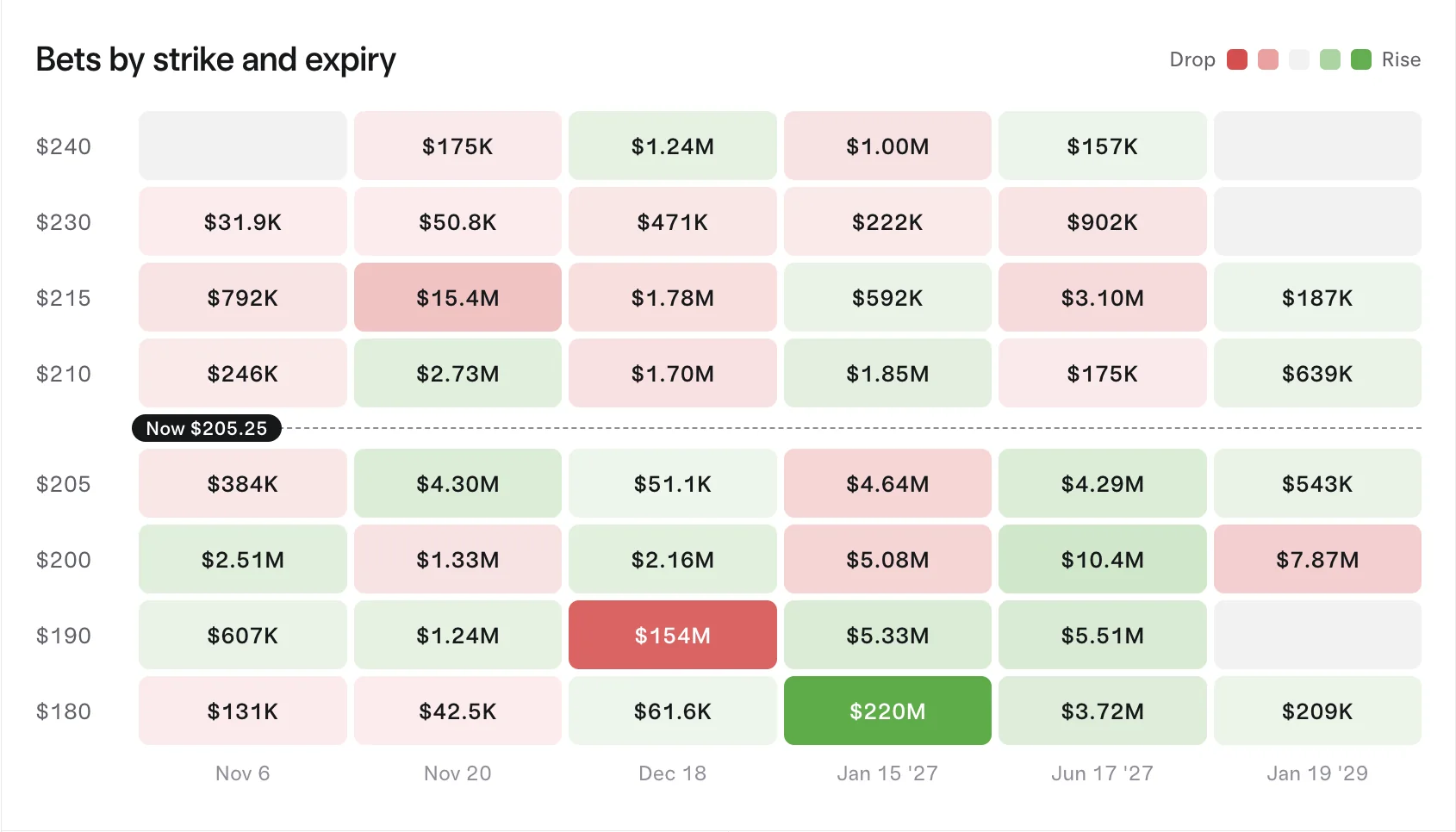
On the Live options flow page, each print shows % OTM next to the strike and spot, plus the Side chip, size, open interest, Vol/OI and tags like Opening and Spread, so a far out-of-the-money call and its possible partner sit a few rows apart. For one stock, the options page (for example META options) maps bets by strike and expiry and lists the largest and unusual orders. Live and Pro are live to the second; Free shows yesterday's session.
Common questions
Do big far out-of-the-money call buys predict a rally?
Not reliably. Some come before big moves; many expire worthless, and many are hedges or spread legs. See does following unusual options activity work.
What counts as far out of the money?
There's no official line. The examples here were 17.6% and 20.0% above the stock. The % OTM figure on a flow row tells you exactly how far.
Why not just buy the stock?
Calls cap the loss at the premium and need far less money up front. The trade-off is that the stock has to move past the strike before expiry, or the premium is lost.
Why do far out-of-the-money calls show up before earnings?
Because earnings are a known chance of a big jump. The catch is that those calls are priced with high implied volatility. See what big call buying before earnings means.
Sources
- Options Industry Council: Long Call, max loss limited to the premium, unlimited profit potential, breakeven at strike plus premium, and zero intrinsic value for out-of-the-money calls.
- Options Industry Council: Bull Call Spread, max gain equals the gap between strikes minus the net debit; breakeven is the long strike plus the net debit.
- Options Industry Council: Options Basics, equity option contracts usually represent 100 shares, with premium priced per share.
- Most bullish options flow on 2026-11-02: MRVL ($23.33M net), AMZN ($16.59M net), TSLA ($12.07M net), LITE ($6.09M net), PLTR ($4.19M net).
- Most bearish options flow on 2026-11-02: AAPL ($40.88M net), AMD ($20.37M net), MU ($10.45M net), NVDA ($7.79M net), ORCL ($7.77M net).
Updated 2026-11-02 16:06 UTC