What big call buying before earnings means
By Faizan Ahmad. Updated .
Big call buying before earnings usually means someone expects a large move up, but it's a harder bet than it looks. Implied volatility climbs into the report and tends to collapse right after it, so calls bought before earnings are expensive, and the stock has to rise by more than that inflated price just to break even. A lot of what looks like call buying is also matched by call selling. Check the bought vs sold split and the expected move before you read it as a bullish signal.
Why calls get expensive before earnings
An earnings report is a known date when the stock can jump. Options sellers know it, so they charge more for options that span the report. That extra charge shows up as higher implied volatility (see what is implied volatility). Once the numbers are out, the uncertainty is gone and implied volatility usually drops fast. That drop is IV crush.
The Options Industry Council gives a clean example: a trader buys a $105 call on a $100 stock for $2.90 the day before earnings, with implied volatility at 80%. The stock rises to $106, but implied volatility falls to 30%, and the call is worth $2.10. Right direction, still a loss.
You could see both halves of this on October 30, 2026. Apple, reporting the following Monday, had implied volatility of 42.4%, up 12.3 points on the day. Amazon, which had just reported, had implied volatility of 39.5%, down 27.3 points in one session.
The expected move is the bar to clear
Options turn implied volatility into an expected move: the size of move the market is pricing in. On October 30, 2026, Apple's options priced a move of about $16.49 either way by November 4 (implied volatility 45.7%), about 4.8% of its $345.10 close.
That tells you how big a move is already in the price. Moves smaller than what's priced in tend to leave option buyers with losses once the crush hits; bigger moves tend to pay. For a call buyer the hurdle is simple: the stock has to rise by more than what the call cost, and that cost is inflated before the report. A small move in the right direction can still lose money, exactly as in the OIC example.
Apple's flow the Friday before earnings
At first glance, Apple's options looked bullish on October 30: $237.50M in call premium against $167.47M in puts. The split tells a different story. Calls bought came to $61.48M and calls sold to $60.17M, almost a wash. Net premium for the day was -$3.51M, a slight bearish lean. Heavy call volume is not the same as heavy call buying.
One of Apple's largest orders that day shows another way big players handle earnings. 325 November 6 255 calls traded for $2.96M against open interest of 51, with Apple at $345.19. That's about $91.08 a share for a call that was $90.19 in the money: less than $1 of time value. With almost no time value, IV crush barely touches it. A deep in-the-money call like this is a way to hold stock-like exposure through the report without paying for the volatility. Whether it was bought or sold, the print doesn't say.
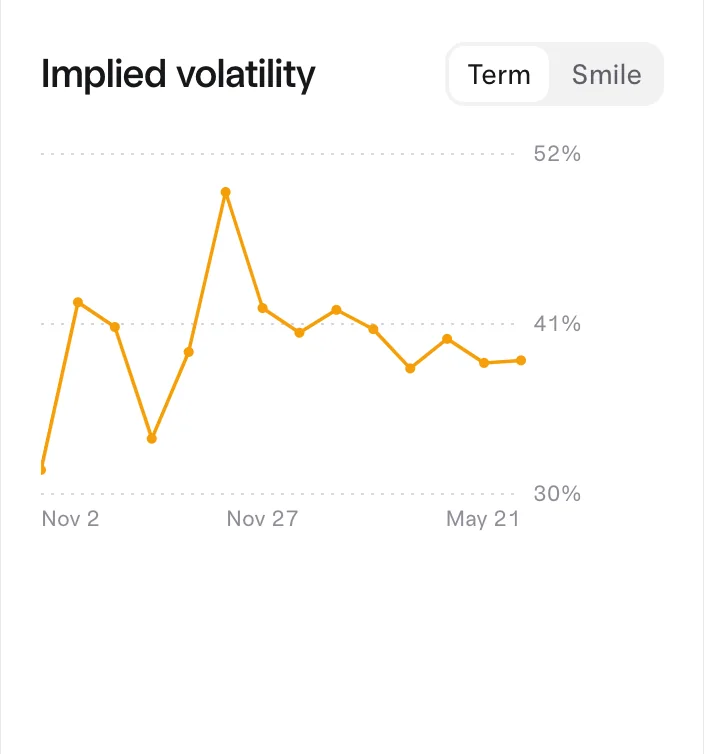
Three stocks, three earnings situations
| Stock (Oct 30, 2026) | Earnings | Implied volatility | Calls bought | Calls sold | What it says |
|---|---|---|---|---|---|
| Apple (AAPL) | Monday, still ahead | 42.4%, up 12.3 pts | $61.48M | $60.17M | Call buying and selling nearly even |
| AMD | Tuesday, still ahead | 74.3%, up 6.6 pts | $47.52M | $58.74M | More calls sold than bought |
| Amazon (AMZN) | Just reported | 39.5%, down 27.3 pts | $68.64M | $88.50M | IV crush after the report |
AMD is worth a second look. It fell 10.28% that day as Intel's weak outlook hit chip stocks, and its implied volatility still rose 6.6 points into its own report. Traders sold more calls than they bought and bought more puts ($98.69M) than they sold ($81.72M), for net premium of -$28.20M. Selling expensive calls into a report is a common way to collect inflated premium, and it shows up in the same flow as the buying.
Amazon shows the other side of the calendar. Its implied volatility went from about 66.8% to 39.5% in a day. Anyone who bought short-dated calls before its report was up against that drop, whatever the stock did.
What big call buying before earnings can mean
- A bet on a beat. Short-dated, out-of-the-money calls bought at the ask, bigger than open interest. The classic bullish read, and the one most exposed to IV crush.
- A volatility bet. Calls bought alongside puts at the same expiry: the trader wants a big move either way, not a direction.
- Stock exposure through the report. Deep in-the-money calls like Apple's 255s, which carry little time value to lose.
- Closing short calls. Traders who sold calls against their shares sometimes buy them back before the report. That prints as calls bought at the ask, often smaller than open interest.
- A spread leg. Calls bought with a higher strike sold, or a near expiry sold against a later one. One leg alone looks bolder than the trade is.
- Inside information. It happens, and the SEC brings cases over it, but a big trade on its own is not evidence of it. See is unusual options activity a sign of insider trading.
How to read call flow before a report
- Split bought from sold. Call volume isn't call buying. How to tell if an options trade was bought or sold explains the side chips.
- Check the expiry. Contracts expiring right after the report are earnings bets. Months-out contracts carry less of the earnings premium.
- Check moneyness. Far out of the money is a bet on a big surprise (see why buy far out-of-the-money calls). Deep in the money is mostly stock exposure.
- Compare size with open interest. Bigger than open interest means new positions.
- Hold it against the expected move. A move smaller than what's priced in usually works against option buyers after the crush.
How to see it on Tradytics
Each stock's options page on Tradytics (for example AAPL options) shows the calls and puts card with calls bought, calls sold, puts bought and puts sold, the expected move by expiry, implied volatility by expiry and strike, and the largest and unusual orders. The options market page lists big movers, the stocks whose options price a big move. Live and Pro show flow live to the second; Free shows yesterday's session, which still shows the setup going into a report.
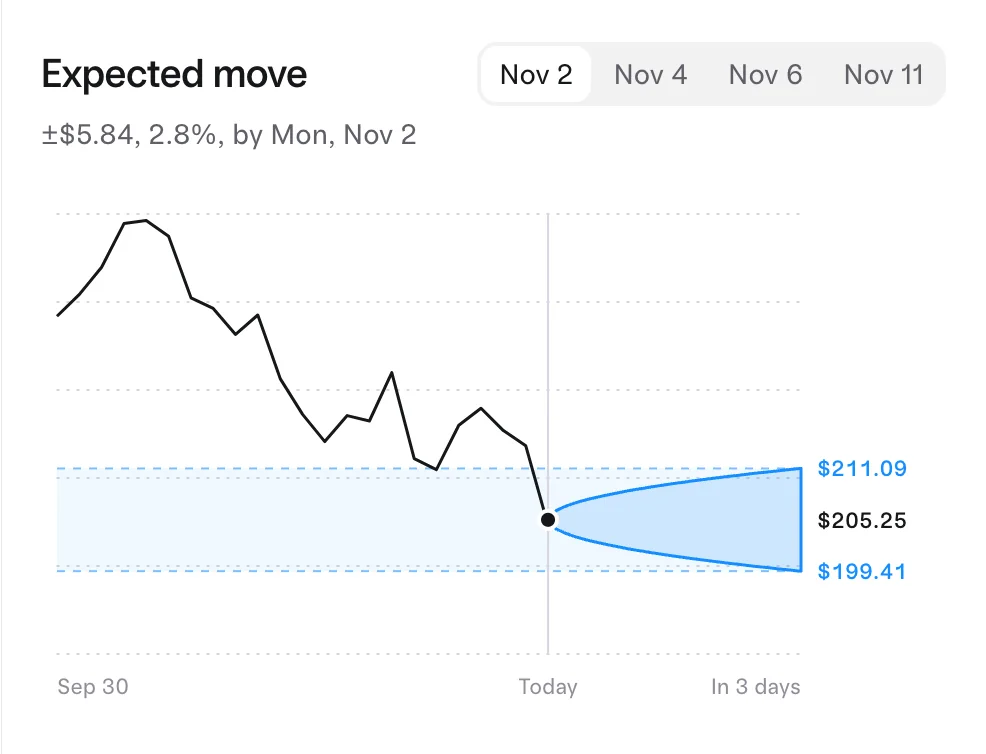
Common questions
Does call buying before earnings mean the stock will go up?
No. It means someone is positioned for a move up, often matched by someone selling. The flow alone doesn't predict the report.
Why do calls lose value after earnings even when the stock rises?
Because implied volatility falls once the uncertainty is gone. If the stock's move is smaller than what was priced in, the drop in volatility can outweigh the gain.
Is it better to buy longer-dated options before earnings?
Longer-dated options carry less of the earnings premium relative to their price, so IV crush hurts them less. They cost more in total and need more time to work.
Why would anyone sell calls before earnings?
To collect premium while implied volatility is high. Holders of the stock also sell calls against their shares. That selling shows up as calls sold at the bid.
Sources
- Options Industry Council: The Crush Is Real (July 2026), the $105 call example where implied volatility fell from 80% to 30% after earnings.
- Options Industry Council: Long Call, how changes in implied volatility and time affect a call buyer.
- Options Industry Council: General Information FAQ, why open interest only updates after clearing at the end of the day.
- Most bullish options flow on 2026-11-02: MRVL ($22.96M net), AMZN ($15.87M net), TSLA ($12.21M net), LITE ($6.09M net), PLTR ($4.27M net).
- Most bearish options flow on 2026-11-02: AAPL ($40.91M net), AMD ($20.61M net), MU ($10.90M net), ORCL ($7.78M net), NVDA ($7.78M net).
Updated 2026-11-02 16:03 UTC